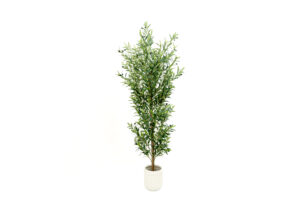

When sourcing realistic artificial trees, buyers need clear quality checks before placing a bulk order. A physical sample can reveal important details such as leaf texture, trunk finish, color variation, canopy fullness, base stability, and assembly quality. Buyers should also confirm that the approved sample will be used as the standard for mass production, with agreed tolerances for color, dimensions, materials, and packaging. This guide explains how to evaluate artificial tree quality, inspect a supplier sample, and reduce the risk of quality differences between the approved sample and the final shipment.
Key takeaways
- Score realism on six physical attributes: leaf texture, trunk, colour layering, canopy fullness, base, assembly.
- The real risk is sample-to-bulk drift, not the sample itself—lock tolerance in writing.
- Ask what inspection the supplier can arrange (SGS/CE reports on request), not what they claim to hold.
- Entry terms we run: mixed first order from 20 pieces, bulk MOQ 100, standard 15-45 day lead time.
- Full-chain in-house control is the practical defence against batch colour drift.
Treat Realism As A Measurable Spec
When you stock trees for a wholesale program or a chain, realism drives sell-through and, eventually, your margin. End shoppers now clock cheap faux greenery at a glance, and a tree that reads as fake under showroom lighting undermines the whole display. The buyer’s job is not to decide whether realism matters—it clearly does—but to convert “looks real” into attributes a colleague in the warehouse can check without being an expert. That single reframe is what separates a repeatable sourcing process from a lucky first order.
If your QC team cannot score it from a photograph and a caliper, it is a preference, not a specification.
Who is buying also sets the bar. A wholesaler taking a full container cares most about a hot-selling form that restocks reliably; an Amazon or FBA seller cares about a differentiated product at a competitive landed price; a retail chain or private-label brand cares about OEM consistency and shelf-ready packing. Each reads “quality” differently, so decide your own buyer type first—the checklist below scores the same six attributes, but the tolerance you set on each should reflect who you are selling to.
Inspect These Six Attributes On A Sample
Ask any credible manufacturer to ship a physical sample before you commit. When it arrives, evaluate these six points and photograph each one as your benchmark:
- Leaf detail and texture. Look for veining, colour gradation and a matte finish. A flat, glossy, identical leaf is the fastest giveaway.
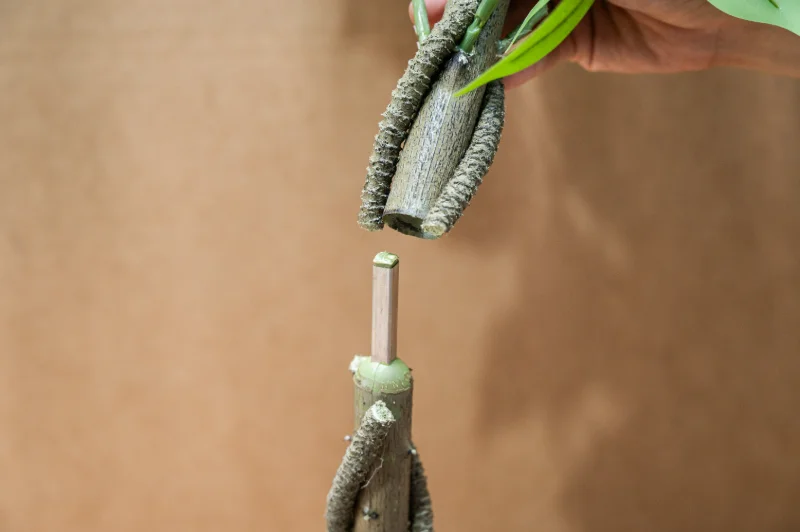
- Trunk and branch structure. A realistic trunk has texture and natural taper; on multi-stem forms, joints should look grown, not moulded into a tube.
- Colour layering. Real foliage is never one green. Blended tones and slight leaf-to-leaf variation signal better tooling and hand-finishing.
- Canopy fullness. Sparse or mirror-symmetrical canopies read as manufactured. A full, slightly irregular silhouette reads as alive.
- Base and stability. The planter or cement base must hold the stated height without wobble—this is the most common returns driver on floor-standing trees.
- Assembly integrity. On modular trees, connectors should seat firmly and repeat across units without forcing.

Ask The Sample-To-Bulk Question Most Buyers Skip
The biggest risk in a tree order is not the sample—it is whether the container matches it. Colour batches, leaf moulds and trunk finishes drift across production runs, and a supplier who buys moulded components from third parties cannot fully control that drift. Before you commit, ask directly: how do you guarantee the bulk matches the approved sample? A trading desk has no real answer. A factory that makes its own moulds does.
We answer it operationally: we send real leaf and trunk samples, then hold the run to what you approved, because tooling, material selection, assembly and packing are all in-house. That full-chain control is worth prioritising over almost any other promise in a supplier comparison.
Verify Build Quality Beyond Looks
Realism wins the sale; build quality protects the margin. Two due-diligence points that rarely appear in a catalogue:
- Materials and inspection. Ask which polymers and colourants are used, and whether the product can be supported by SGS/CE inspection reports on request. A manufacturer that can arrange testing is a different animal from one who simply asserts quality.
- Repeat tolerance. Confirm acceptable colour and dimension tolerances in writing. Faux greenery carries a small agreed colour range; settling it up front prevents a dispute at receiving.
Do not stop at the product itself—specify how it is protected in transit. A tall tree that arrives with a crushed canopy is a defect regardless of how good the mould was. Confirm the packing method, whether the base is secured, and how the supplier handles a transit-damage claim, because that after-sales path is part of build quality, not an afterthought.
For classification and duty planning, artificial plants and trees fall under HTS heading 6702—worth confirming with your customs broker before you model landed cost.
Read The Manufacturer, Not Just The Product
Quality claims are cheap; verifiable capability is not. Before ordering, check the supplier can demonstrate the operational facts behind consistency:
- A real factory with in-house mould-making and assembly, not a trading desk.
- Predictable capacity and lead time. We run a standard 15-45 day lead time across the range, with about 50,000 pieces of monthly capacity (up to 80,000 in peak).
- Fair entry terms. We take a mixed first order from 20 pieces and bulk orders from a 100-piece MOQ—low enough to trial a new species without over-committing.
- Honest certification status. We do not claim certifications we have not passed; where a standard matters to your market, we cooperate with audits and can arrange inspection reports.
Lock Consistency From Sample To Container
Approving a sample is only half the control. The other half is a written tolerance sheet your receiving team can check against, because “close enough” is where disputes start. Faux greenery carries a small agreed colour and dimension range; settling it before production turns a subjective argument into a measurable pass or fail. Use the approved sample as the master and record what deviation is acceptable on each attribute:
| Attribute | Pass signal | Fail signal |
|---|---|---|
| Leaf texture | Veined, matte, tone variation | Flat, glossy, identical leaves |
| Trunk | Texture and natural taper | Smooth moulded tube, visible seam |
| Colour | Within agreed batch range | Noticeable drift vs approved sample |
| Canopy | Full, slightly irregular | Sparse or mirror-symmetrical |
| Base | Holds stated height, no wobble | Tips, rocks, undersized pot |
Write the tolerance into the purchase order, not an email thread. On a first order paid T/T 50/50, the balance release is your leverage to hold the run to that sheet. Then make the six-attribute check part of receiving, not a one-time approval—score a random carton against the sheet on each delivery and log it. Because tooling, materials, assembly and packing run in-house, we can hold that standard across reorders, but the receiving check is what turns a supplier claim into a number you can act on.
Consistency itself is a manufacturing fact, not a promise. A supplier that buys moulded components from third parties cannot fully control leaf moulds, colour batches or trunk finishes across a run; a factory that makes them can. Grand Green runs two cooperating entities: a crafts factory handling final assembly and, since 2025, a plastics company that injection-moulds core components—trunks, leaves and flower bases—in-house. Mould development, raw-material selection, production, assembly and packing all sit under one roof, and the company holds its own import/export clearance. That is why an approved leaf is the leaf that ships, and why batch colour drift is a variable we control rather than inherit.
Settle the exceptions before shipping too: agree in writing how transit damage on a visible trunk or canopy is photographed and reshipped, and how consumable parts such as the base or planter are compensated or over-shipped on the next order. Those two edge cases cause most of the arguments that sour an otherwise good container.
Verification also has to aim at the right market. The quality bar is not the same in every market, and checking against the wrong one wastes the sample stage. Two broad patterns show up across our order book:
- Europe and North America. Buyers push hardest on realism, safety and compliance, durability and near-zero maintenance; commercial contracts there apply strict certification requirements, so verification includes what testing the supplier can support.
- Middle East. The logic inverts: large sizes and a generous, upscale look matter more than a marginal realism point, and heat, sun and dust resistance drive material choice. Price sensitivity is lower, but tolerance for a product that fades or warps under real exposure is lower too.
Decide which end market the container is destined for before you score the sample, because it changes what “pass” means on every attribute above.
A Pre-Order Checklist You Can Copy
- Request physical leaf, trunk and base samples in writing.
- Score realism on the six attributes; photograph your benchmark.
- Confirm sample-to-bulk control and the acceptable colour/dimension tolerance.
- Verify factory capacity, MOQ and the 15-45 day lead time.
- Ask what testing or audit support the supplier can arrange.
- Agree after-sales handling for transit damage before shipping.
Print that list and hand it to whoever receives the container. Verification only counts when the person signing for the goods checks against the same bar the buyer set at sample stage, with the tolerance sheet and the approved sample both to hand.
Want The Sample Before The Spec Sheet
We ship real leaf and trunk samples so what you approve is what we hold the production run to. Review the factory behind the product before you commit volume.
Frequently Asked Questions
How do I tell a realistic artificial tree from a cheap one?
Check leaf veining and matte finish, trunk taper and joints, colour layering across leaves, canopy fullness, base stability and how firmly modular parts seat. Glossy, uniform leaves and a moulded tube trunk are the fastest tells.
Should I order a sample before a bulk order?
Always. The sample is how you set the benchmark; the real risk is whether the container matches it. Approve physical leaf, trunk and base samples, then lock the acceptable tolerance in writing.
What MOQ and lead time should I expect?
At Grand Green a mixed first order starts from 20 pieces and bulk orders from a 100-piece MOQ, against a standard 15-45 day lead time. Many peers set a 300-piece floor.
Can the supplier provide quality test reports?
Ask what they can arrange rather than what they claim to hold. We can support SGS/CE inspection reports on request and cooperate with audits, but we do not state certifications we have not passed.
Why does sample-to-bulk consistency matter so much?
Colour batches, leaf moulds and trunk finishes drift between runs. A factory that makes its own moulds and assembles in-house controls that drift; a trading company usually cannot, which is where dead stock comes from.
Compare Tree Suppliers On Verifiable Facts
Browse the range, request a sample set for the species you are stocking, and hold every supplier to the same six-point checklist.